If you bought or refinanced your home between 2019 and 2021, there's a good chance you're sitting on a mortgage rate most buyers today would love to have. That's a great position to be in — until you need to move. Right now, nearly half of all homeowners have a mortgage rate of 4% or lower, and almost 8 in 10 have a rate below 6%. The average rate on a new 30-year mortgage, meanwhile, is sitting at 6.58%. That gap is why so many homeowners are asking the same question: should I sell my house or rent it out instead?
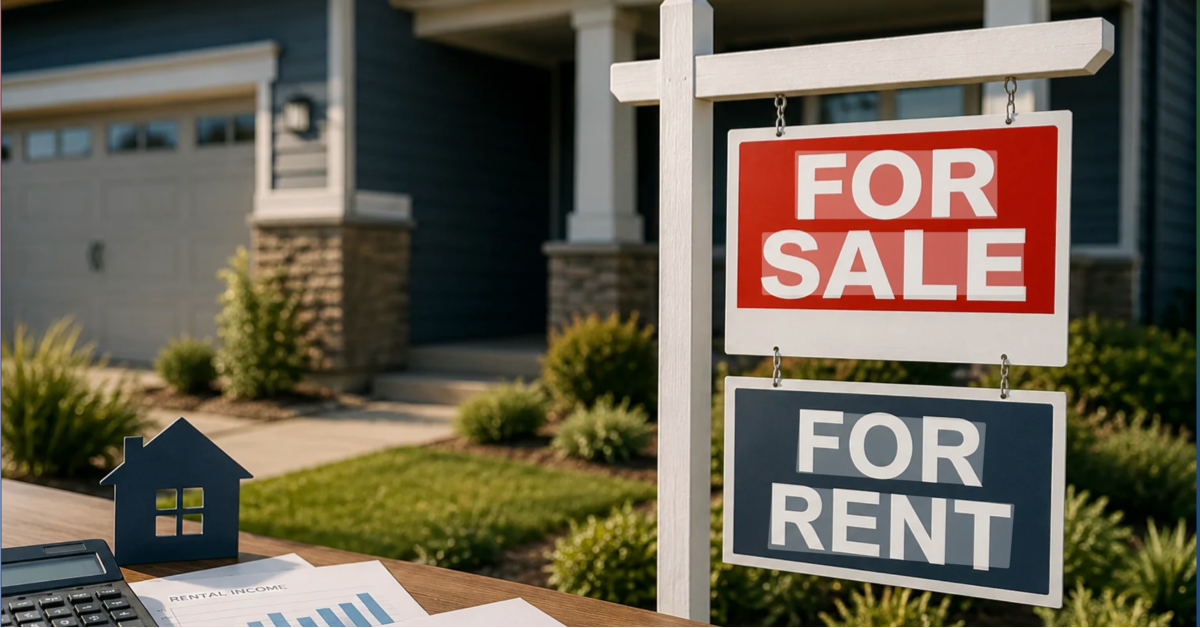
Image Source: The Close
Why your low rate makes selling feel expensive
Here's the tradeoff nobody loves to think about: when you sell your current home, you also give up your current mortgage. If you buy another home, you'll likely finance it at today's rate — which could be two points or more above what you're paying now. On a similarly priced home, that difference can add hundreds of dollars to your monthly payment.
Research on this exact situation found that for every one-point gap between your original rate and today's rate, you become roughly 18% less likely to sell. It's not that homeowners don't want to move — it's that moving now costs more than it used to.
Of course, life doesn't always wait for interest rates to drop. A new job, a growing family, a divorce, or a relocation can make moving necessary regardless of the math. That's exactly why more owners in your position are choosing a third option: renting out their current home instead of selling it.
Why more homeowners are renting instead of selling
You're not alone if this feels like new territory. A recent analysis of rental listings found that 2.3% of homes currently for rent had been listed for sale within the past few months — the second-highest share recorded in nearly six years. In plain terms: a growing number of people who tried to sell their home ended up renting it out instead, often without ever planning to become a landlord.
This shift shows up most in places where homes are taking longer to sell, and buyers have more negotiating power — markets like Denver, Houston, Austin, and San Antonio. Single-family homes are especially likely to become rentals, more so than townhomes or condos, because they tend to attract stronger rental demand.
If your home didn't sell — or you're hesitant to list it because of what you'd give up — renting might be worth a serious look. But it's not automatically the right move for everyone.
What is an "accidental landlord"? An accidental landlord is a homeowner who ends up renting out their property without ever planning to be in the rental business — usually because selling stopped making financial sense. If that sounds like where you're headed, read our full guide: Becoming an Accidental Landlord →
What renting your home actually costs.
Before you decide to keep your house and rent it out, it helps to know that renting isn't free money on top of your mortgage. Your rental income needs to cover realistically:
- Your mortgage principal and interest
- Property taxes and homeowners insurance
- HOA dues, if applicable
- Vacancy periods between tenants
- Repairs and maintenance
- Property management fees, if you hire help
If you have significant equity and a low payment, you likely have more flexibility to rent profitably or to hold out for the right offer. If your margins are tight, renting could end up costing you more than a price adjustment would have.
How to decide: sell or rent?
The clearest way to answer this question is to compare your options side by side rather than guessing. Before you decide, it's worth gathering:
- What your home could realistically sell for, based on recent comparable sales in your area.
- What your home could realistically rent for, based on current listings nearby.
- Your full costs as a landlord — mortgage, taxes, insurance, HOA, maintenance reserves, and management, if you don't plan to self-manage.
- How long you'd actually need or want to rent the home, and what your plan is after that.
- Your reserves — enough to cover a vacancy, a major repair, or a slow rental season without financial strain.
Once you can see your likely sale proceeds next to your likely rental cash flow, the right decision usually becomes much clearer. And because taxes, insurance, legal requirements, and day-to-day property management each come with their own rules, it's worth looping in a CPA, an insurance agent, an attorney, and a property manager before you commit either way.
The bottom line
Your mortgage rate isn't just a number from your closing paperwork — right now, it's one of the biggest factors in whether selling or renting makes more financial sense. Neither option is automatically better. But running the numbers before you decide can save you from a costly surprise, whether that's an underpriced sale or an unprofitable rental.
If you're weighing whether to sell or rent your home, we can walk you through both scenarios and help you see the real numbers before you decide. Reach out to schedule a consultation.
Source: The Close
