Quick answer: Mortgage preapproval is a lender's written commitment — based on a thorough review of your income, credit, and assets — that tells you how much you can borrow. It's different from prequalification (a rough, unverified estimate), and it's the single step that turns "just looking" into "ready to make an offer." Most W-2 buyers with straightforward finances can get preapproved in 24–48 hours once paperwork is in.
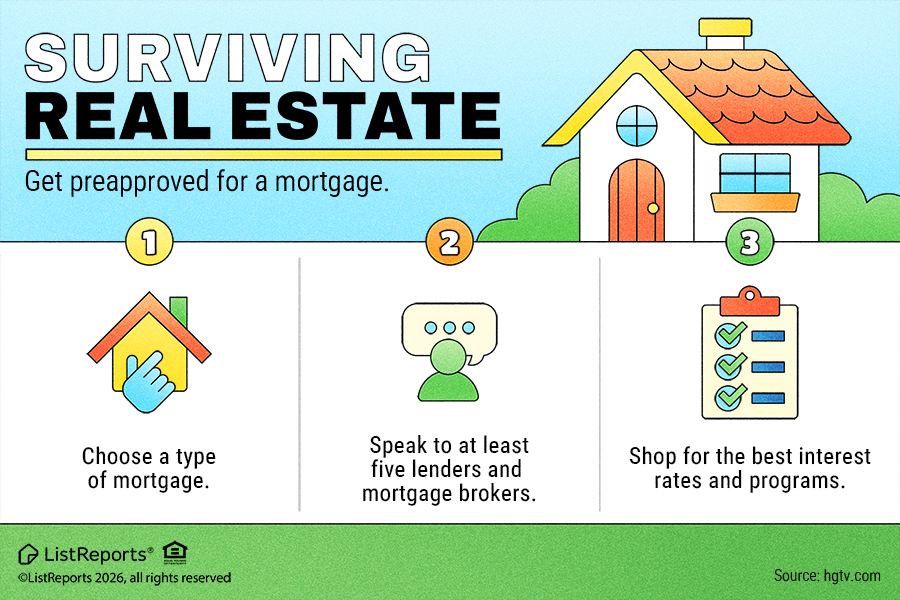
A strong offer starts well before you find the home you want to buy. Getting your financing in order early helps you understand your budget, shop with confidence, and act fast when the right home comes along — and on the Treasure Coast, where well-priced homes can move quickly, that head start matters. Below is what preapproval actually involves, what to gather, and how the process looks a little different depending on whether this is your first home or your next one.
Preapproval vs. Prequalification: They're Not the Same Thing
Quick answer: Prequalification is a quick, informal estimate based on numbers you self-report. Preapproval is a verified, underwritten commitment based on documents a lender actually checks — pay stubs, tax returns, bank statements, and a credit pull.
Sellers and listing agents know the difference, too. In a competitive market, an offer backed by real preapproval carries far more weight than one backed by a same-day prequalification estimate. If you're serious about buying within the next few months, preapproval — not prequalification — is the step worth doing.
Documents You'll Need for Preapproval
Gathering these ahead of time is the single biggest thing you can do to speed up the process. Most lenders will ask for some version of the following:
Identity and employment
- Government-issued photo ID
- Recent pay stubs (last 30–60 days)
- W-2s from the last two years
Financial documentation
- Bank statements, all accounts (last two months)
- Federal tax returns, last two years, with schedules
- Investment and retirement account statements
- A list of your current monthly debts
Housing and credit
- Current mortgage statement, if you already own
- Landlord/rental history, if you're renting
- Authorization for the lender to pull your credit report
If it applies to you
- Gift letter, if part of your down payment is a gift
- Business tax returns and profit-and-loss statements, if you're self-employed
Borrowers with simple, W-2 income who submit everything up front can sometimes get preapproved in as little as 24–48 hours. Self-employed borrowers or more complex financial situations typically take longer, so it's worth starting this conversation with a loan officer early — even before you start touring homes.
If This Is Your First Home
First-time buyers tend to have two things on their mind going into preapproval: How much can I actually afford? and Do I have enough for a down payment? A good loan officer will walk through both, and there's more flexibility here than many first-time buyers expect.
A few things worth asking about specifically:
- Down payment assistance and first-time buyer programs — many are available at the state or local level and can lower the amount you need up front.
- Gift funds — if family is helping with part of your down payment, ask what documentation the lender needs to avoid delays later.
- Building or protecting your credit — even small, avoidable mistakes (opening a new credit card, financing a car) between preapproval and closing can affect your approval, so it's worth asking your loan officer what to avoid during the process.
- Debt-to-income ratio — lenders typically want your total monthly debts, including the new mortgage, to fall within roughly 43–50% of your gross monthly income, depending on the loan type.
None of this needs to be figured out alone. Part of what a good real estate agent and loan officer do together is make sure a first-time buyer understands not just what they qualify for, but what payment they'll actually be comfortable with.
If You're Moving Up
Move-up buyers face a different puzzle: you likely have equity in your current home, but that equity is tied up until you sell — which raises the question of whether you buy first, sell first, or try to do both at once.
| First-time buyer | Move-up buyer | |
|---|---|---|
| Down payment source | Savings, gifts, or assistance programs | Often equity from current home |
| Key question | What can I afford? | Buy first or sell first? |
| Preapproval complexity | Usually straightforward | May involve contingencies or bridge financing |
| Timing pressure | Lower — no home to sell | Higher — two transactions to coordinate |
| Extra tools to ask about | Down payment assistance, gift letters | Home sale contingency, bridge loan, HELOC |
A few options worth discussing with your lender if you're in this position:
- A contingent offer — making your purchase dependent on the sale of your current home. It protects you financially but can make your offer less competitive in a fast-moving market.
- A bridge loan — short-term financing that lets you access equity from your current home before it sells, so you can buy without waiting. It works well in some situations and isn't worth the cost in others, so it's a conversation to have with your loan officer, not a default assumption.
- A HELOC on your current home, opened before you list it, as another way to access equity for your next down payment.
- Carrying two mortgages temporarily — some buyers qualify to hold both loans briefly if the numbers support it; your lender can tell you quickly whether that's realistic for your situation.
There's no single right answer here — it depends on your equity, your comfort with timing risk, and what the local market looks like right now. This is exactly the kind of decision worth making with your agent and lender together, before you're under time pressure.
How Long Does Preapproval Last?
Quick answer: Most preapproval letters are valid for 30–60 days. If your home search runs longer than that, your lender will typically just need updated pay stubs or bank statements to refresh it — it's usually quick, not a full re-application.
Frequently Asked Questions
Does getting preapproved hurt my credit score? A preapproval typically involves a hard credit inquiry, which can cause a small, temporary dip in your score. Multiple mortgage inquiries within a short shopping window (typically 14–45 days, depending on the scoring model) are usually counted as a single inquiry, so it's fine to compare a couple of lenders.
Can move-up buyers get preapproved before their current home sells? Yes. Lenders can preapprove you based on your current financial picture, and then work with you on strategy — contingent offer, bridge loan, or carrying two mortgages — depending on how your numbers look once you're ready to write an offer.
How much does preapproval cost? Preapproval itself is typically free or low-cost through most lenders, though some may charge a fee for a credit report pull. Ask upfront so there are no surprises.
What's the difference between preapproval and final loan approval? Preapproval is based on documentation you provide before you find a home. Final approval happens after you're under contract, once the lender has verified everything and the home has appraised.
Ready to Get Started?
A strong offer starts well before you find the home you want to buy. If you're thinking about buying — whether it's your first home or your next one — send me a message and let's build the right team around you, starting with a loan officer who can help you choose financing that actually fits your goals.
Contact Eric Slifkin and the Slifkin Real Estate Team to get connected with a trusted local lender and start your preapproval.
Eric Slifkin is a Broker Associate with Keller Williams Realty Treasure Coast, serving buyers and sellers across Martin, St. Lucie, and Indian River counties.
