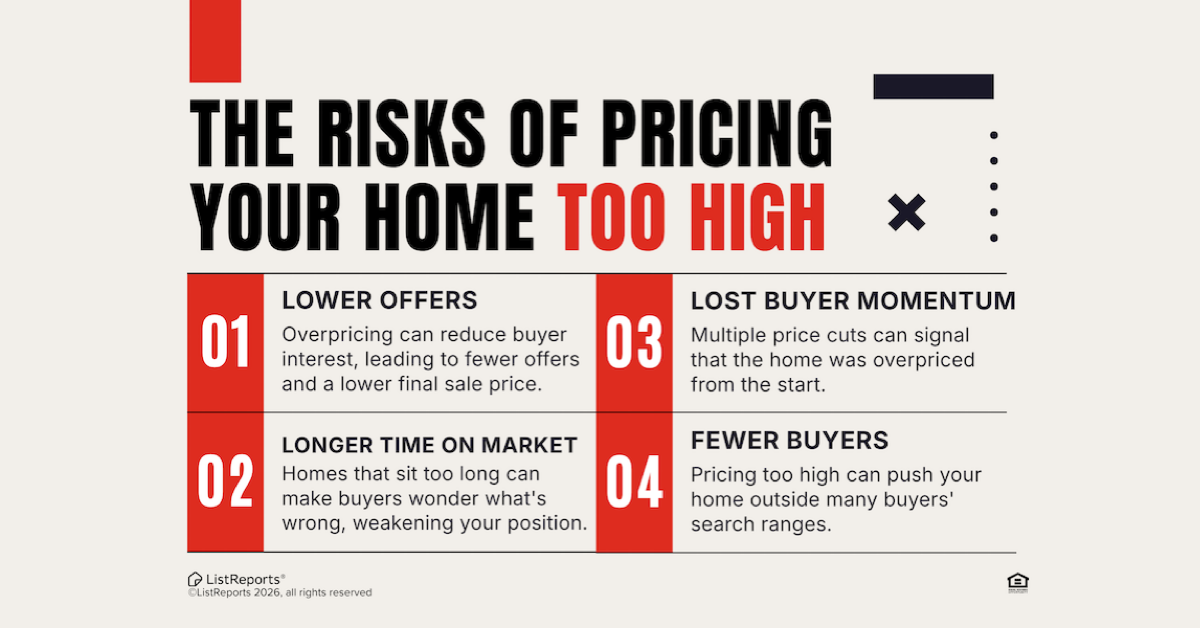
When you decide to sell your home, it's tempting to set a high asking price. Maybe you've seen what a neighbor got last year, or Zillow's Zestimate is flattering, or you just want room to negotiate. It's a natural instinct — but it's one of the most expensive mistakes a seller can make. Here on the Treasure Coast, we see it regularly: a well-maintained home sits on the market for 60, 90, even 120 days while comparable homes sell in weeks. Almost always, the culprit is the same — it was priced too high from the start. Here are five very real risks of overpricing your home, and why the right price from day one is almost always the better strategy.
1. You Miss the Most Important Window — the First Two Weeks
The moment your home is listed, it gets a surge of attention from buyers who've been actively searching and have alerts set up. This is your hottest audience: motivated, pre-qualified, and ready to act. If your price is out of step with the market, those buyers scroll right past you — and go under contract on a home that is priced right.
Once that initial window closes, you're relying on new buyers entering the market. That's a much smaller pool, and you've already lost momentum.
2. Buyers Assume Something Is Wrong
There's a reason experienced buyers and their agents look carefully at "days on market." When a home sits, the assumption isn't "great, we have time to think about it." It's "what's wrong with it?"
Buyers begin to wonder if there's a hidden inspection issue, a title problem, a difficult seller, or structural concerns the photos don't show. The longer a home sits, the harder it becomes to overcome that perception — even if the home is perfectly fine.
3. You'll Likely Net Less Than If You'd Priced It Right
This is the counterintuitive part that surprises many sellers: overpricing often results in a lower final sale price than strategic pricing would have produced.
When you finally reduce the price (and most sellers do), you've already burned through the best buyers. The offers that do come in tend to be lower and more aggressive because buyers factor in that the property has been sitting. Studies consistently show that homes that sell in the first few weeks typically sell closer to — or above — list price, while homes that linger tend to sell significantly below it.
4. Appraisal Problems Can Kill the Deal
Even if an enthusiastic buyer agrees to your price, the deal isn't done. Their lender will order an appraisal — and the appraiser doesn't care what you're asking. They care about what comparable homes have actually sold for.
If your home doesn't appraise at the contract price, the buyer either has to come up with the difference in cash, you have to lower the price, or the deal falls apart. None of those are good outcomes.
5. You're Helping Your Competition
Here's something sellers rarely consider: an overpriced listing actually makes competing homes look better. Buyers who tour your home and find it overpriced don't stop shopping — they go make an offer on the comparable property that's priced correctly.
Your listing, in effect, is driving traffic to your neighbors.
What Smart Pricing Actually Looks Like
Strategic pricing isn't about pricing low. It's about pricing accurately — at the point where market data, current absorption rates, and buyer demand converge. An experienced agent will pull a comparative market analysis (CMA) looking at recent closed sales, active competition, and pending listings to find that sweet spot.
On the Treasure Coast, market conditions can vary significantly between Stuart, Palm City, Jensen Beach, Port St. Lucie, and even neighborhood to neighborhood. A home in Sailfish Point competes against a very different buyer pool than one in Palm City or Hutchinson Island. Local expertise matters.
When a home is priced right, it attracts multiple interested buyers, creates urgency, and often results in stronger offers — sometimes above list price. That's the outcome most sellers actually want.
The Bottom Line
Pricing your home is part art, part science, and entirely consequential. The good news is you don't have to guess. An experienced Treasure Coast listing agent will give you a clear, data-backed pricing recommendation — and explain exactly why it positions you for the best possible outcome.
Curious what your home is worth in today's market? Contact Eric Slifkin for a personalized market analysis and honest pricing consultation.
