Real Estate Tips and Topics
A term that anyone undergoing a house sale should know is “contingency” and along with that, understand that just because an offer is accepted, doesn’t mean that the deal is going to go through.
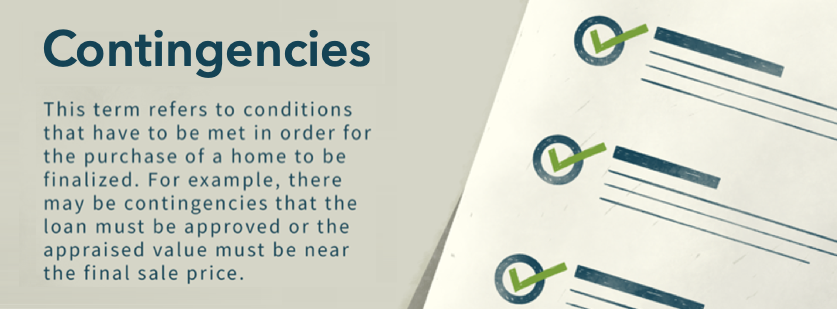
Contingencies are part of any standard contract and define the efforts that must be done before a deal is finalized. In addition to a home inspection with the buyer approving the results, there may be contingencies for financing, insurance, and agreed-upon repairs.
All of this is necessary because if something that was agreed upon is not done as stated, the potential buyer has an out. For instance, suppose the sale was contingent upon the seller removing the living room carpet or fixing a crack in the chimney, and those weren’t done by closing time. Then the buyer is not required to go through with the deal.
Typical Contract Contingencies
A finance contingency states that if the buyer cannot secure an acceptable mortgage or obtain other means of financing to buy the home, the buyer can terminate the agreement and the seller may re-list the home.
An insurance contingency ensures the house and the new buyers can be insured. This isn’t as prevalent, but for those buying in areas with a history of toxic mold, earthquakes, or floods, insurance carriers no longer automatically issue a policy, so the contract can be contingent on applying for and receiving an insurance commitment in writing.
Homebuyer sale contingencies making the deal contingent on buyers selling their own home can be risky for sellers, as there’s no guarantee the other home will eventually sell. Even if the contract allows the seller to continue to market the property and accept offers, the house may be listed “under contract,” making it less attractive to other potential buyers.
Seller buying contingencies asking that the deal be made contingent on the seller successfully buying another home can be a problem for buyers who must gain possession by a specific date.
Obviously, the most significant part of any contingency is putting it all in writing. Your REALTOR® will be able to lead you through what needs to be done to achieve a successful transaction..
A home transaction is one of the most important things you may ever do, so make sure you take all the proper steps to ensure you get what you pay for.
:format(webp):quality(80)/u.realgeeks.media/treasurecoasthomesales/TCHS_logo_blog_1.png)