Treasure Coast Real Estate Blog

March 11, 2018

Avoiding Fraud in Real Estate

Real Estate News March 2018Avoiding Fraud: Key Practices in Real Estate
By Suzanne De Vitadecorative imageWhether by compromised data, cracked passwords or phishing, real estate is a target for cyber criminals. More and more, homebuyers and sellers-and the practitioners who serve them-are reporting theft via wire fraud, in which criminals access emails, learn of a pending transaction, and then message phony wiring instructions to victims. Bogus DocuSign emails, emails with illegitimate referrals and ransomware are also on the rise. 

Being a victim of wire fraud can be devastating - the funds are almost always irretrievable once sent. And aside from making off with money, criminals can filch personally identifiable information, or PII, through any or a combination of schemes. 

So how can you protect yourself when buying a home?

  1. Being aware that you may be a target is key to protecting yourself from fraud. By educating yourself on the danger, you're much more likely to identify suspicious activities and changes to procedure that are utilized by hackers.
  2. Be sure that you clearly understand the wiring instructions for your transaction, and ensure that you're getting that information from a verified source. Title and settlement companies should send you instructions on your wire transfer through a secured service, not just through an email. Many will also have their standard procedures posted on their website. Make a phone call to a number that's listed on the title or settlement agency's website to speak with a real person to verify the information.Don't just call the number listed at the bottom of the written instructions - that information could be bogus too.
  3. If something seems wrong or fishy, it probably is. If you are sent a message requesting a partial payment, notifying you in a change in the deadline for your transfer, or detailing a new procedure for your wire transfer, don't do anything without talking to your agent. Last minutes changes are a big red flags.


Contact Eric Slifkin to buy or sell a home on the Treasure Coast.

Eric Slifkin, a Broker Associate, is the founder of the Slifkin Team at Keller Williams Realty. Eric and his team of experienced agents serve South Florida and the Treasure Coast, including greater Stuart, Port Saint Lucie, and the Palm Beaches.


Posted in News
Feb. 16, 2018

Beachfront Condo On Hutchinson Island

529 NE Plantation Road, Stuart, FL

OPEN HOUSE February 18, Sunday 1:00 PM - 3:00 PM

$ Click for current price
2 BEDROOMS | 2 (2 full ) BATHROOMS | 1249 SQUARE FEET

Oceanfront Living on South Hutchinson Island! Enjoy panoramic views from this top-floor 2 bed / 2 bath unit with expansive screened terrace. Features include tile floors plus updated kitchen and baths. Memberships available at the Ocean Club for golf, tennis and fitness center.

Presented By:

Eric Slifkin

Team Leader
Keller Williams Realty
772-288-1765
Licensed In: Florida
License #: 3068299

  • Link on Facebook
  • Link on Twiiter
  • Connect on YouTube
  • Connect on Google+
  • Connect on LinkedIn
 
Posted in Lisitings
Feb. 13, 2018

Financing Home Renovations

 
Using a Home Equity Line of Credit (HELOC) to Finance Your Projects
decorative image
Homeowners looking to undertake home renovations can often use a home equity line of credit or HELOC to finance their projects. Here are six quick tips on how to shop for and manage a HELOC:
Home Loan Scale

Shop around. Comparison shop to get the best rate. 

Ask about the margin. If you're offered a rate that's lower than the competition, it's probably just an introductory rate, so ask about the lender's margin. For example, if the introductory rate is 3.5 percent and your lender's margin is 2 percent, your final interest rate will be 5.5 percent. 

Consider a conversion clause. Some HELOCs allow you to convert a variable interest rate to a fixed rate, usually during the draw period (5-10 years). 

Watch out for balloon payments. Balloon payments mean that you must pay the balance in full when the draw period is up. Do not choose this option unless you have the financial means to handle it. 

Create a family plan. Decide what the money will be used for and who will handle the funds. Keep in mind, you can lose your home if the HELOC is not handled properly. Create a payback plan. Come up with a reasonable plan for how the loan will be paid back.


Eric Slifkin

Eric Slifkin is the founder of the Slifkin Team at Keller Williams Realty. Eric and his team of experienced agents serve South Florida and the Treasure Coast, including greater Stuart, Port Saint Lucie, and the Palm Beaches.

Eric’s successful real estate practice can be attributed to his background in Information Technology, which helped shape his vision of marketing homes online to buyers and for sellers along the Treasure Coast and Palm Beach real estate corridor.


Posted in Finance, News
Feb. 11, 2018

Home Values Have Changed

Recent home sales have affected your home's value! Get your home's new value and home selling guide -- no obligation! Get Your Home's Value

Home Valuation

Selling a home on Florida's Treasure Coast? Our team of real estate professionals will help you sell your home in the shortest time, at the highest possible price, and with the least amount of stress. Get Your Home's Value

Frequently Asked Questions About Home Values


Eric Slifkin

Eric Slifkin is the founder of the Slifkin Team at Keller Williams Realty. Eric and his team of experienced agents serve South Florida and the Treasure Coast, including greater Stuart, Port Saint Lucie, and the Palm Beaches.

Eric’s successful real estate practice can be attributed to his background in Information Technology, which helped shape his vision of marketing homes online to buyers and for sellers along the Treasure Coast and Palm Beach real estate corridor.


Feb. 2, 2018

Stuart Market Report

Zillow Monthly Market Trends for Stuart, Florida

As many local agents suspect, Stuart real estate appears to be experiencing a gradual shift towards a buyer's market. Zillow's monthly report for Stuart shows some downward pressure on prices while forecasting appreciation at under 3% for the next 12 months (average appreciation ranges from around 3% - 5%).


Zillow
Market Report
Our mission at the Stuart Home Search Team is to simplify the home buying or home selling process for our clients. We are an un-corporate, local, forward-thinking team of agents and support personnel who embrace technology while maintaining a strong connection to our clients. We take the time to listen, understand your challenges and goals, and answer any questions you may have along the way.
Shared by
Eric Slifkin (Keller Williams Realty)
Stuart home values
The median home value in Stuart is $215,700. Stuart home values have gone up 3.9% over the past year and Zillow predicts they will rise 2.5% within the next year... Read more
Market Health
4.2/10
Less healthy
Home value change, foreclosures and more
 
Median Zestimate
$215,700
+3.9%
1-yr change
+2.5%
1-yr forecast
See more home values
Do you have any questions?
Agent photo  
Eric Slifkin
 (35)
26
Recent sales
Keller Williams Realty
(772) 288-1765
Posted in Market Reports
Jan. 27, 2018

Affordable Homes in Stuart, FL

3795 SE Middle Street

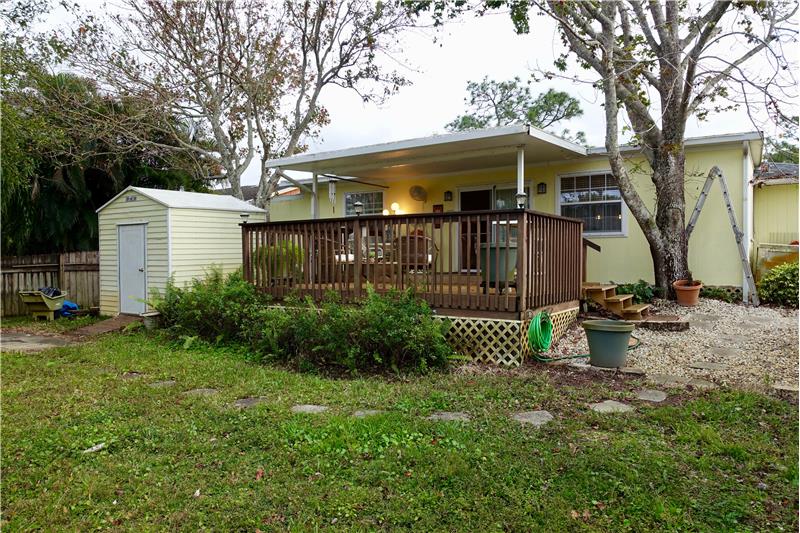
Single Family Home For Sale In Stuart, FL -- Charming first or retirement home! This is a two bed / two bath home with a den or possible third bedroom. Features include vaulted ceilings, gas fireplace in the living room, updated kitchen, a built-in Murphy bed in the guest room, 16X21 family room, huge deck, fenced yard and much more. Excellent central Stuart location minutes to shopping, dining, beaches, and top-ranked Stuart schools.


Overview
Maps
Photos
Features
Description
Video


$245,000
Single Family Home
Main Features
2 Bedrooms
2 Full Bathrooms
Interior: 1,572 sqft
Location
3795 SE Middle Street
Stuart, FL 34997
USA

Posted in Lisitings
Jan. 22, 2018

Heading out of Town? Make Sure Your Home is Protected

Heading out of Town? Make Sure Your Home is Protected

Whether you’re heading out of town for the weekend or packing up the entire family for an extended vacation, taking the time to make sure your home is protected before hitting the road is crucial. By taking the following tips into consideration, you can go on vacation knowing that your home will be safe and sound while you’re away.


1. Make it look like someone is home. Install timers on interior lights so they turn on and off periodically. There are also products available that are capable of varying the time that your lights turn on. You may even want to consider leaving a radio on and tuned to an all-news or talk show station. 

2. Disconnect and remove all exterior electrical decorations to reduce the chance of fire and theft. If you don’t already have them, install exterior lights controlled by motion sensors to make your home a more difficult target for prowlers. 

3. Make a plan for the newspaper and other deliveries. If you provide enough notice, you can put your newspaper delivery on hold. Otherwise, ask a neighbor to grab your paper and any other circulars or brochures that may be left on your front stoop. Likewise for any unexpected UPS deliveries.

4. Have the post office hold your mail. If you can’t arrange for a neighbor to pick up your mail, notify the post office up to 30 days in advance of your vacation; at a minimum, two days will be needed to process your request. 

5. If you have an alarm that is monitored, tell the alarm company you’ll be away. If possible, provide a phone number where you can be reached.

6. Nothing beats a good neighbor. Ask your neighbor to keep an eye out for any suspicious activity and possibly even park their car in your driveway, if yours is on the road with you or at the airport. If police regularly patrol your neighborhood, give law enforcement authorities your schedule so they can watch for suspicious activity. If there's a crime-watch program, notify the person in charge.


Eric Slifkin

Eric Slifkin is the founder of the Slifkin Team at Keller Williams Realty. Eric and his team of experienced agents serve South Florida and the Treasure Coast, including greater Stuart, Port Saint Lucie, and the Palm Beaches.

Eric’s successful real estate practice can be attributed to his background in Information Technology, which helped shape his vision of marketing homes online to buyers and for sellers along the Treasure Coast and Palm Beach real estate corridor. 

Posted in Home Ownership
Jan. 19, 2018

The Home Equity Playbook


What is Home Equity?

Home equity seems to be a very simple calculation — the total amount of mortgages owed subtracted from the current market value of a home. Here is a simple example:

Current Home Market Value             $325,000
Existing Mortgage                                    $225,000
Homeowner Equity                                 $100,000

One side of the equation is well defined, and it is found on the monthly mortgage statement, the loan balance. The other side is less obvious — the current market value of the property.

As a homeowner, your down payment purchases your initial equity, and your monthly (or additional) principal payments increase your equity. In strong real estate markets and in-demand locations, equity can increase quite rapidly as the property value increases, but the inverse can also happen — too much available inventory and market down-cycles can lead to falling home values and a reduction in homeowner equity.

It can be difficult to put an accurate value on something that you have emotional and monetary vesting in. It is safe to say that most people think their home is worth more than then it is.

Homeowners can make savvy assessments about their home’s current market value by following the sales of similar properties in the neighborhood but should stay away from websites such as Zillow and Trulia, which provide inaccurate and outdated estimates. The most accurate measurement requires a comparative market analysis from a real estate professional or having the home professionally appraised. But, the bottom line — your home is worth as much as someone is willing to pay for it.

Creating Value is in Your Hands

Maintaining the condition of a home is vitally important to retaining and increasing value. Homes are judged against their peers: how they compare to similar homes in the neighborhood. Another way to retain value is to not over upgrade since it is rare to ever recoup the money spent if you exceed neighborhood value. Keep up the landscaping and do the little things to add curb appeal.

Putting Home Equity to Work

Home equity represents the largest single asset of millions of people, and because it represents so much of an individual’s net worth, it must be treated with respect. Home equity is not a liquid asset until a property is sold, or it is borrowed against.
There are two types of loans that tap into homeowner equity as collateral.

Home Equity Loans 
Many home equity plans set a fixed period during which the person can borrow money, such as 10 years. At the end of this “draw period,” the person may be allowed to renew the credit line. If the plan does not allow renewals, the homeowner will not be able to borrow additional money once the period has ended. Some plans may call for payment in full of any outstanding balance at the end of the period. Others may allow repayment over a fixed period, for example, of 10 years.
A home equity loan, sometimes called a second mortgage, usually has a fixed rate and a set time to pay it back, generally with equal monthly payments.

Home Equity Line of Credit
A home equity line of credit is similar to a credit card. The lender sets a maximum amount you can borrow, and you can draw money as you need it, though many home equity lines of credit require an initial draw. The interest rate varies daily and is usually prime plus a set number, but the required payment is usually interest only. Once the loan has been paid down, the payment is reduced, and it can be paid off and initiated as many times as a homeowner requires.

How Much Equity can be Accessed?

Since the financial institution is lending money and using a home as collateral, they will not lend 100% of the home’s equity. The bank does not want to take the risk that if the house price drops, they would be carrying a loan for more than its market value. Therefore, most banks will allow a qualified homeowner to borrow approximately 80% of their equity.

It’s Important to Use Your Home Equity Wisely

Because it is likely the biggest asset most people have, losing your home equity is hard to overcome. It must be used in prudent ways, and the payments against the loan must be affordable. Using equity money to make the loan payment is only acceptable for a short-term solution.
There are a number of good reasons to use money from a home equity loan… and some really bad ones. First, let’s cover smart uses.

1. Invest in Your Home

The best way to use the money is to create more equity in the home. Among the very best returns on your investment (ROI) include kitchen and bathroom remodels, adding square footage or an extra bath, enhancing curb appeal and repairing/keeping the existing structure sound. Making prudent investments in your home is a wonderful win-win: you enjoy the upgrades and the repairs can add value to the home.

2. Invest in your Children’s Education

Using your home equity to finance a child’s higher education may be the greatest payoff of all. Not only is the rate much lower than a student loan, it is an investment in the child’s future.

3. Supplement Retirement Needs

Older homeowners spent their working lives paying down their mortgage. At retirement, when monthly income is reduced, a home equity loan could pay for a dream vacation or an unexpected major expense.

4. Augment the Impending Sale of a Home

If you’re planning to sell soon, a home equity line of credit may be the best way to finance improvements, and you can pay it off entirely when you sell. Investing wisely on upgrades and repairs may even reap a profit on your investment.
Here are some examples of some not very wise choices.

Adding luxury amenities like a swimming pool, a hot spa, lavish landscaping, expensive appliances and exotic countertops and flooring rarely pay off.

Purchasing a car or boat or most any personal luxury items is a poor use of the funds since these items quickly depreciate in value.

Also stay away from using money on risk-heavy investments. Financing stock purchases, start-up businesses and paying routine bills is not financially smart. If you cannot afford to purchase those items with available funds, using equity from your home means they should not be in your budget.

You should treat a home equity loan as an investment and not as extra cash when making financial decisions. If your intended use of the money doesn’t pay you back in some way, it’s not the best use of your valuable equity.

We Are Happy to Assist You

If you would like an assessment of the market value of your home and the current equity you can access, give us a call for a comparative market analysis. 


Eric Slifkin

Eric Slifkin is the founder of the Slifkin Team at Keller Williams Realty. Eric and his team of experienced agents serve South Florida and the Treasure Coast, including greater Stuart, Port Saint Lucie, and the Palm Beaches.

Eric’s successful real estate practice can be attributed to his background in Information Technology, which helped shape his vision of marketing homes online to buyers and for sellers along the Treasure Coast and Palm Beach real estate corridor. 

Posted in Home Valuation
Jan. 15, 2018

Was That Escrow Deposit Made?

Was That Escrow Deposit Made? How to Verify

By Meredith Caruso

Jan. 15, 2018 – A lot of Legal Hotline questions focus on escrow deposits, and a significant number of those questions come from listing agents who are upset that they haven't received proof that the funds actually made it into an escrow account – or even just a simple notification that the buyers did indeed deposit money by the dates stated in the contract.

Most Common Escrow Deposit Issues

Proof of deposit

No law requires an agent to send a copy of an escrow check (or wire transfer) to prove that an escrow deposit was made. Furthermore, a copy of a check doesn't do much good. It proves only that a check was written – not that it was given to the escrow agent in accordance with the contract.

Verification of deposit

The requirement for verification of the escrow depends on who chooses the escrow agent, the buyer or the seller. If the buyer chooses the escrow agent and it is a title company or an attorney, Section 61J2 of the Florida Administrative Code says the following rules apply:

If the buyer chooses a title company or attorney as the escrow agent, the licensee who prepares the contract must indicate the name, address and telephone number of the selected title company or attorney on the contract.

Within 10 business days after each deposit is due, the broker representing the buyer must make a written request to the title company or attorney, asking the escrow agent to verify receipt of the buyer's deposit.

Then, within 10 business days of the date that request was sent, the broker for the buyer must provide the seller's broker with a copy of the confirmation of receipt from the escrow agent.

If there is no response from the title company or attorney, the buyer's broker must inform the listing broker that they did not receive verification from the escrow agent.

Note that this rule only applies if:

1.The buyer chooses the escrow agent

2.The escrow agent is an attorney or title company

If the seller picks a title company or attorney as the escrow agent, the above rules do not apply and there is no verification requirement.

The listing broker can confirm receipt by contacting the escrow agent directly after each deposit is due according to the dates in the contract. If the buyer chooses a title company or attorney as escrow agent, the buyer's broker must comply with Florida Administrative Code and provide a response to the listing broker.

If a broker – not a title company or attorney – is holding the escrow, then the two brokers involved in the transaction can confirm receipt upon request, but there is no procedure for verification required by law.

Understanding the role of the agents with respect to escrow verification is key to avoiding potential unnecessary conflict.

Meredith Caruso is Manager of Member Legal Communications for Florida Realtors

© 2018 Florida Realtors®


Posted in Finance, Open House
Nov. 7, 2017

Inlet Isle At Rocky Point

Now Available for Sale In Inlet Isle At Rocky Point -- Like new CBS home in the gated community of Inlet Isle. Move-in ready 4 bed / 3 bath home with lots of upgrades including an en-suite master, newer AC, tile floors throughout, professional landscaping, covered porch, and a huge yard that will accommodate a large pool. Excellent Rocky Point location with nearby marina and a short drive to shopping, dining, medical facilities, and top-ranked Martin County schools.

Posted in Lisitings